|

Cruise Overview With only three scheduled cruises each year, this world first itinerary takes passengers on an incredible journey through the rich history and diverse cultures of the Fiji Islands. The 7 Day/6 Night Historical and Cultural Gold Club cruise ventures off the beaten track to the international dateline and the northeast tip of the Fiji Islands. Experience three different South Pacific cultures; Melanesian, Micronesian and Polynesian, while exploring remote island locations, some never visited by commercial vessels before. Resident experts travel with this special cruise to provide you with a truly unique perspective on the history of the Polynesian Fijians (Kioa Islanders), the Micronesian Fijians (Rabi Islanders) and the Melanesian Fijians and the now local Indian community .
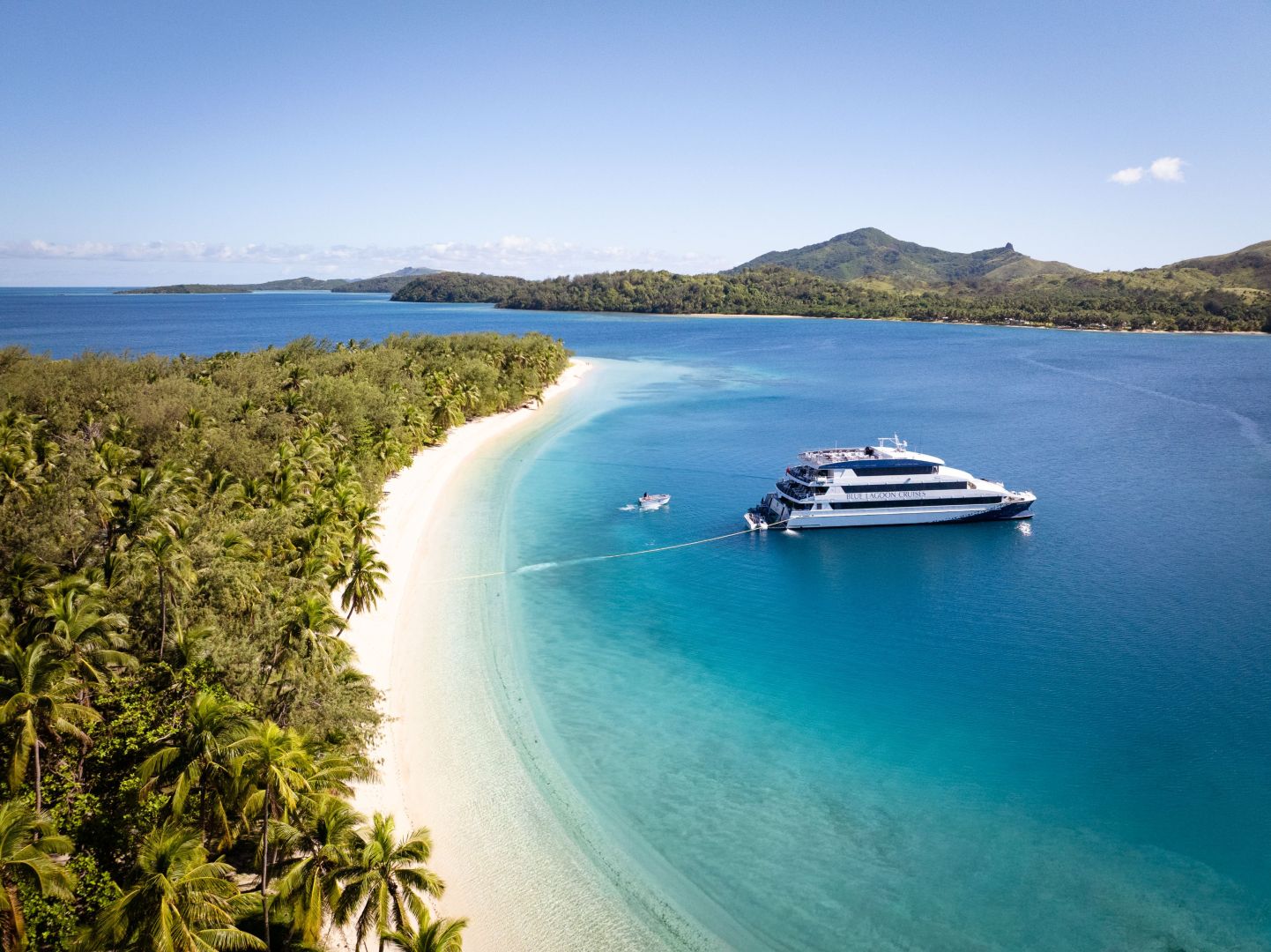
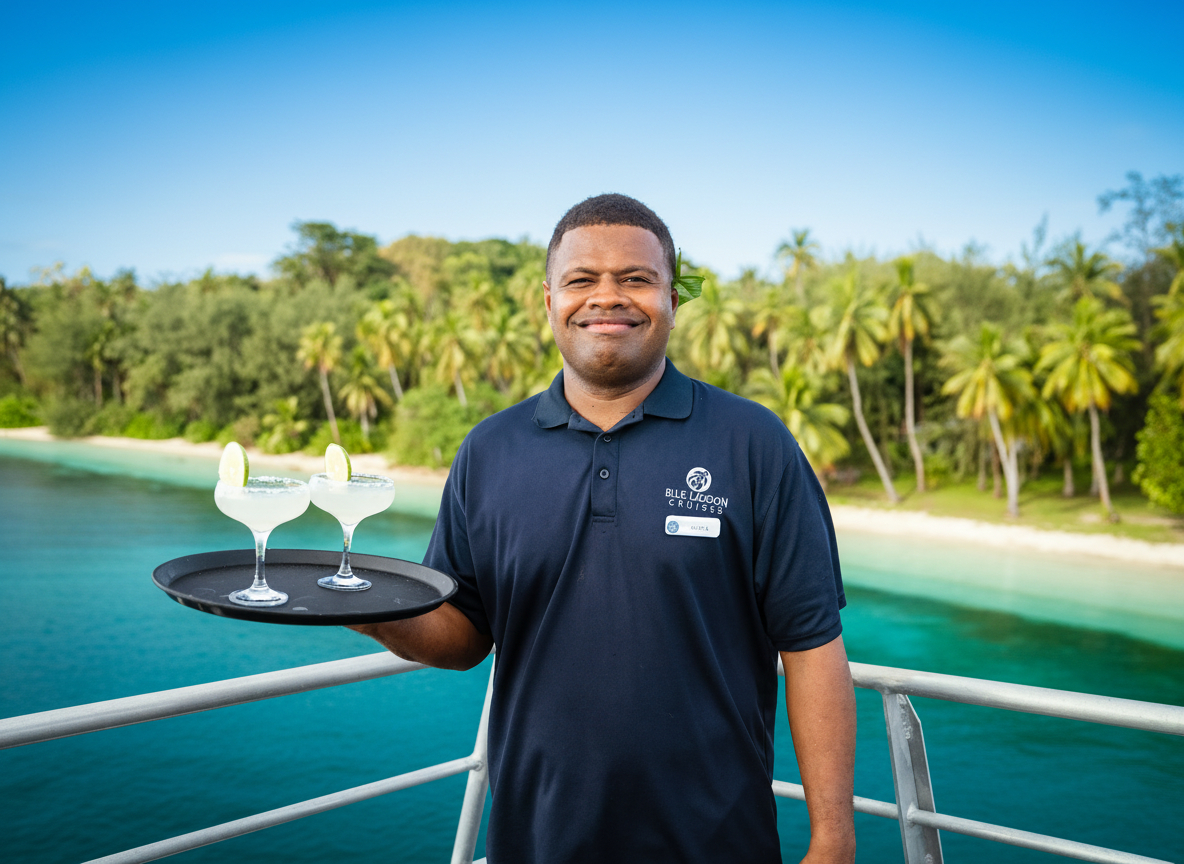
Day One - Nananu-i-Ra Island Final check-in time is 0900am at our pre-boarding lounge in Lautoka, for a 10am departure from the wharf. We depart, cruising east, up the coast of Viti Levu, bound for Nananu-I-Ra Island. Nananu-I-Ra or "Daydream Below" has vast areas towered over by the brooding and majestic Nakauvadra Mountain Range, the traditional home of the Fijian Serpent God, Degei, Creator of all islands. Against this backdrop of island scenery, complimentary champagne and hors d’oeuvres are served on the Sky Deck as the sun sets. Tonight a superb selection of South Pacific fare is served for the captains welcome dinner while anchored for the evening in the lee of Nananu-I-Ra Island.
Day Two - Historical Levuka The first sunrise in the islands is a magical experience as the light gradually reveals a pristine white sandy beach, fringed with palm trees. For the energetic there is an optional early morning dip before breakfast. Levuka, nestled at the base of a steep bluff on Ovalau’s south-east coast, is a fascinating destination, well off the beaten tourist track. The feeling of the past is palpable in Levuka with its ancient buildings and monuments. With a population of around 1500, Levuka can be seen in a relatively few hours by joining the walking tour. This tour allows you to rediscover the unique and historical sites of Fiji’s first Capital. After dinner the vessel will depart for Taveuni and anchor overnight close to the town of Waiyevo.
Day Three Morning – Taveuni Flora and Fauna After breakfast we depart for a tour of the island of Taveuni, the third largest island in the Fiji archipelago. The first European to sight the verdant, rugged and volcanic Taveuni was Able Tasman in 1643. Taveuni’s inhabitants were feared throughout the Fiji group as fierce warriors who relished the taste of human flesh. Taveuni is renowned for its abundant flora and fauna and is more commonly known as the Garden Island. The dense, virgin rainforests are festooned with orchids, ferns and teeming bird life. Bird watchers consider Taveuni among the best of the big islands.
Day Three Afternoon – Kioa’s Polynesians After breakfast we visit the 180th meridian close to the town of Waiyevo before heading to Bouma Falls, one of the most beautiful spots on Taveuni. Located in the Tavoro National Park, the famous Bouma Waterfalls drop into large cool pools splendid for swimming and diving off the rocks. We return to the vessel and lunch is served enroute to Kioa. Since 1946, when it was purchased by the Ellice Islands, Kioa has been home to 300 Polynesians from Vaitupu Island in Tuvalu (the former Ellice Islands) who faced overpopulation on their home island. At Kioa Island we are met by a small fleet of outrigger canoes paddled by Kioa islanders in traditional costumes. We join the Kioans ashore for their own brand of welcoming before rejoining the vessel and cruising to Rabi.
Day Four Rabi's Micronesian Banabans
Rabi hasn’t caught up with the last century yet, let alone this one. An island off the south eastern coast of Vanua Levu, with four villages and about 4000 inhabitants, Rabi doesn’t have a resort, a hotel, a restaurant or anything resembling tourism infrastructure. In 1941, the British government purchased Rabi Island to serve as a new home for the Micronesian Banabans of Ocean Island (Banaba) in Kiribati, whose home island was being ravaged by phosphate mining. The 180th Meridian Dateline cuts through both Uma and Tabiang villages. Having received special permission to visit the Micronesian Banabans from the chairman of the Rambi Island Council, morning tea and lunch is served on the beach where there is the opportunity to go swimming and snorkeling. We rejoin the vessel and depart for Tabiang Village where passengers can go ashore for a guided tour of a traditional Banaban village and Micronesian cultural show.
Day Five – Yadua Passage and Drudrua & Kavewa Islands in Macuata
Day Six – Yasawa Islands
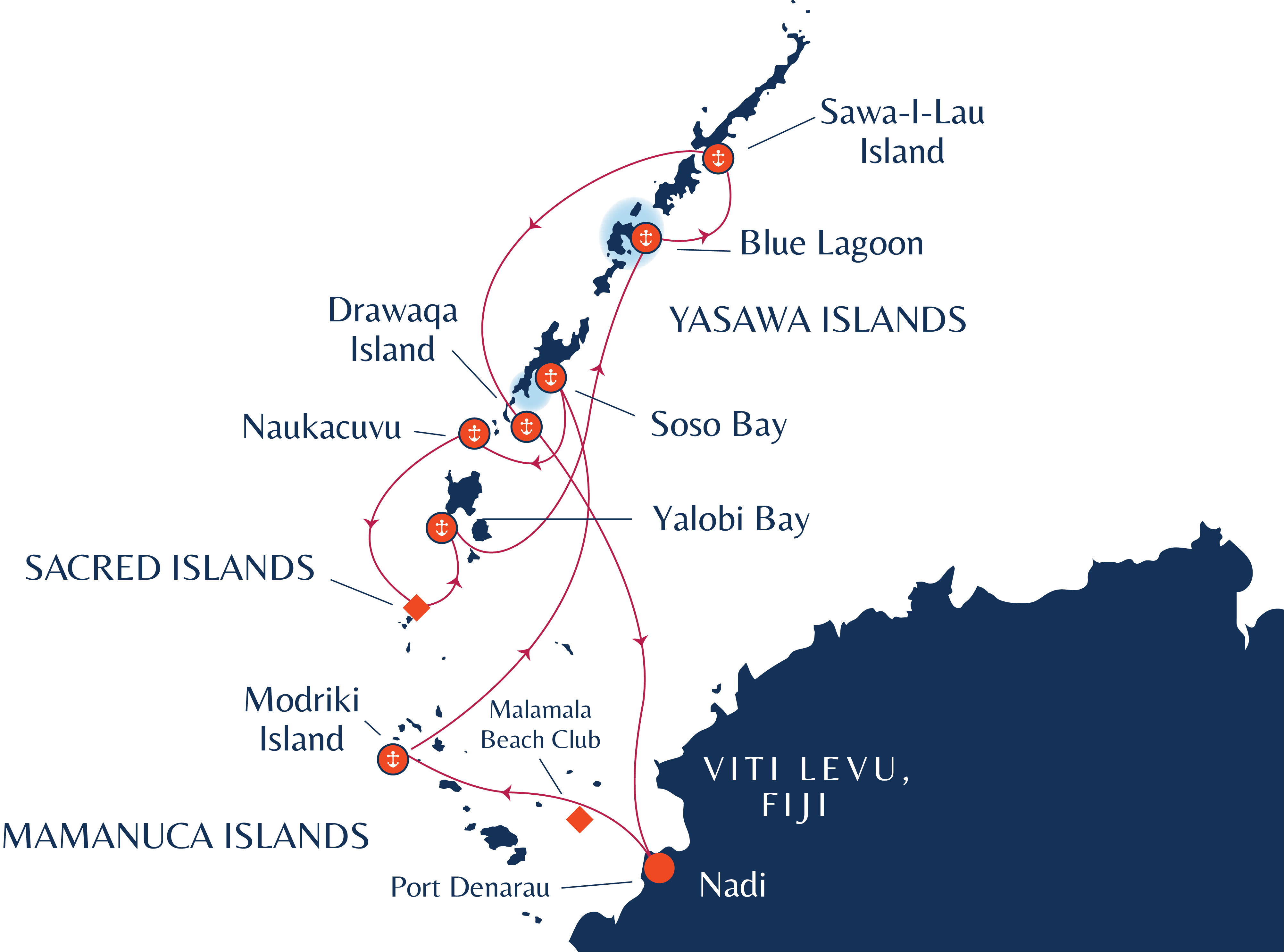
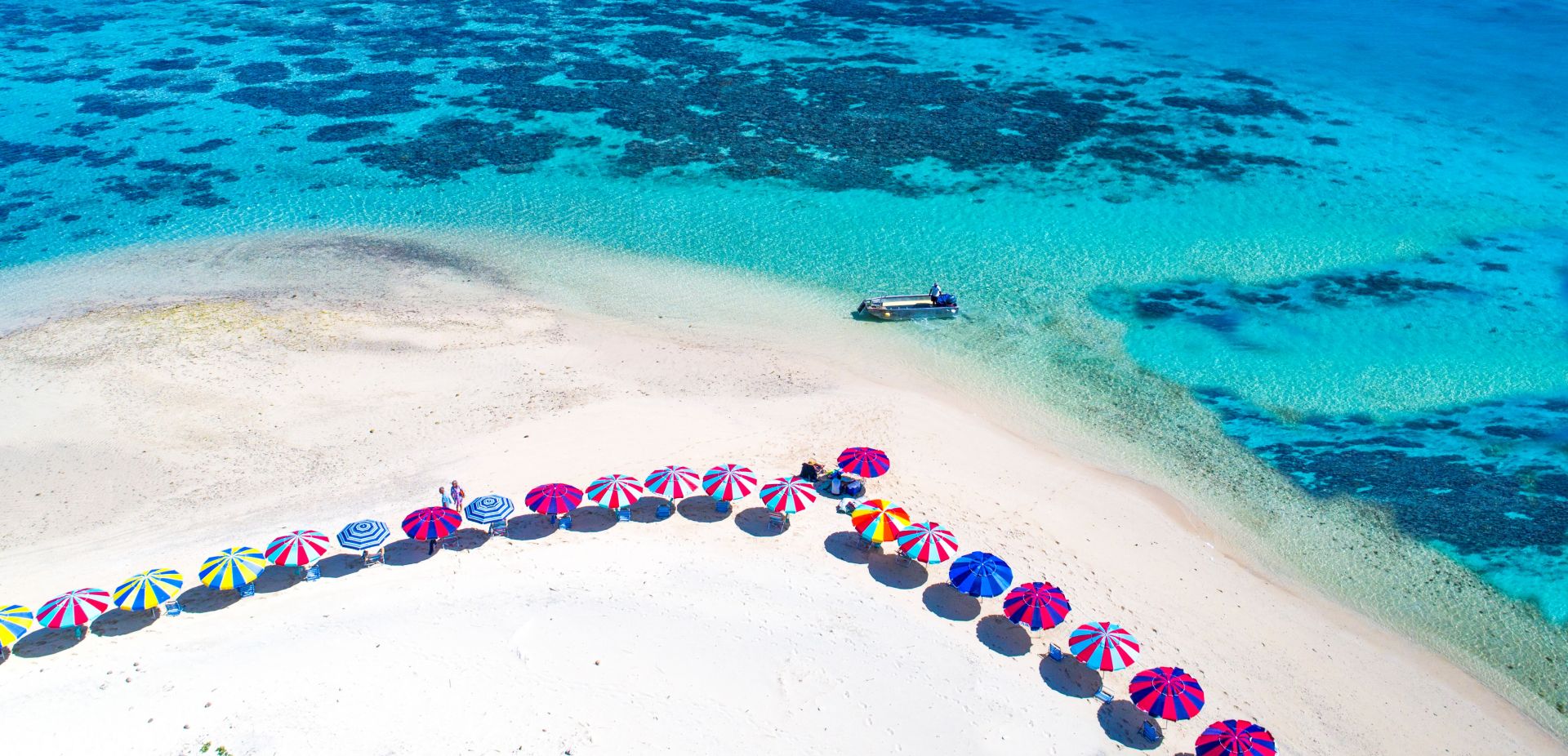
The Yasawa group of islands are a string of volcanic islands with steep mountains and gorgeous beaches. The Yasawa Group is undoubtedly the most appealing of the Fiji Islands for beach lovers and water enthusiasts. On your first morning in this paradise you can enjoy an optional early morning swim and a hearty breakfast before disembarking at a traditional Fijian village for a traditional welcome ceremony. Lunch is served aboard as we set sail for our own private island Nanuya Lai Lai, known around the world as the Blue Lagoon. Once ashore a variety of activities await you including sail boarding , coral viewing, spy boarding, paddle boards, fish feeding, fishing, sunbathing, snorkeling and for the more energetic, volleyball with the crew. There is also the option to go scuba diving at an additional cost. Tonight is Island Night and a feast or "Magiti" is being prepared with the traditional Fijian undergound earth oven method of cooking or "Lovo". After dinner, a beach party captures the spirit and romance of the South Pacific.
Day Seven – homeward bound After an early morning swim the anchor is lifted for the last time as the Captain sets a course for Lautoka during breakfast. Later morning refreshment are served as the Fiji Princess cruises through the Yasawa islands to arrive at Lautoka wharf at noon. Your last memories of this extraordinary experience are the haunting lyrics of Fiji’s farewell song “Isa Lei” sung by your crew.
|